Cake Sheds: The Essential Guide to Food Safety and Compliance
Thinking of Opening a Cake Shed? Here's What You Need to Know About Food Safety
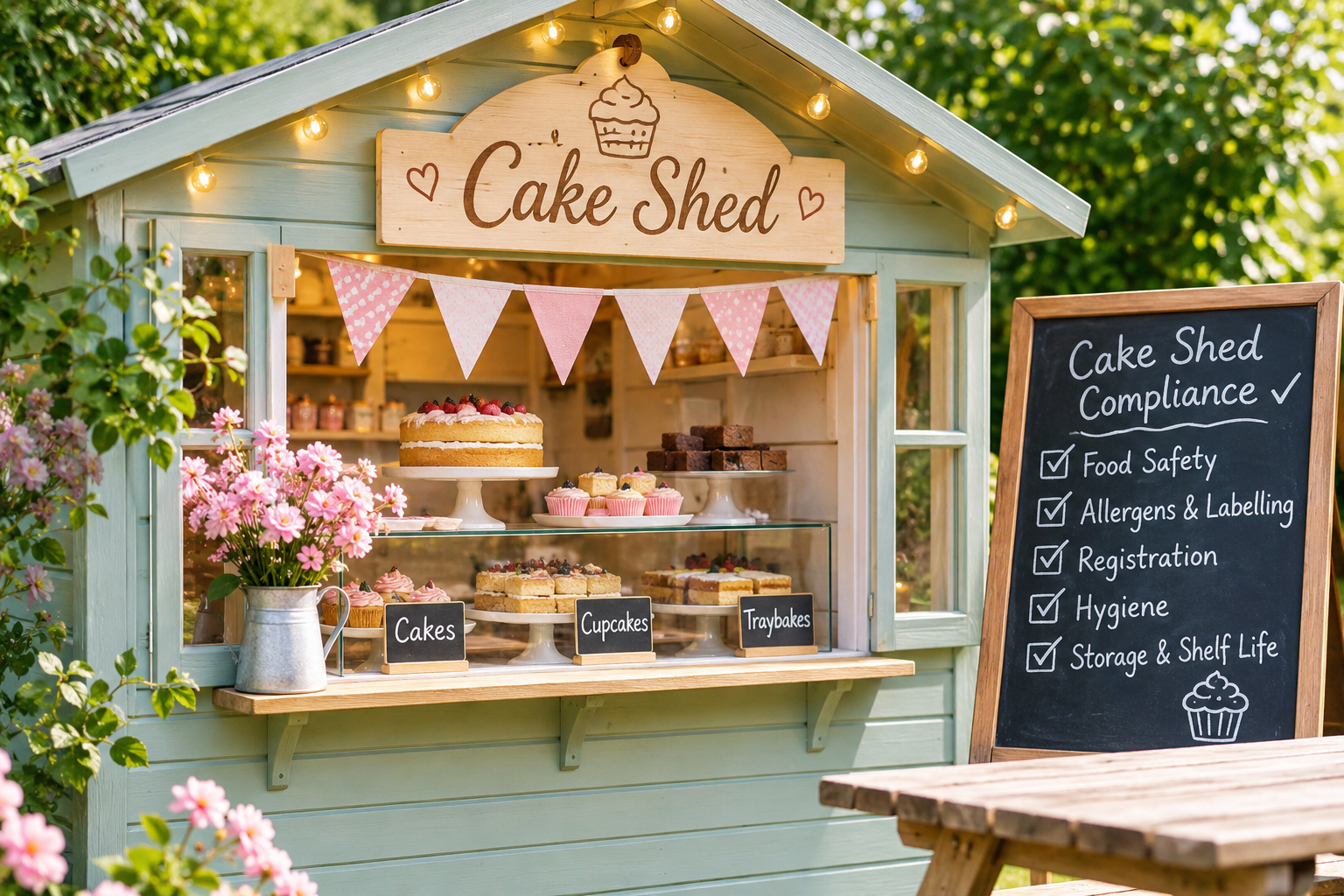
Cake sheds have become a familiar sight in many villages and rural communities. From little roadside huts selling homemade brownies to honesty-box stalls filled with cupcakes and traybakes, they're a lovely way for home bakers to share their creations while earning some extra income.
And it's easy to see the appeal. You don't need a traditional shopfront, the initial costs can be relatively low, and you can often fit the business around your existing commitments.
But there's a little more to running a cake shed than baking a few cakes, putting them on display and leaving out an honesty box.
The moment you start selling food to the public as a business, you take on responsibilities for making sure that food is safe. It doesn't matter whether you're selling from a purpose-built hut, your garden or a small roadside stall.
So, if you're thinking about opening a cake shed, here are a few things worth getting right from the beginning.
First Things First: Registering Your Cake Shed
Before you start selling, you'll normally need to register your food business with your local council's Environmental Health department.
Registration is free and should be completed at least 28 days before you begin food operations.
This applies even if you're baking everything in your own kitchen. If you're preparing cakes at home and selling them from a separate shed, it's worth discussing both locations with Environmental Health to make sure everything is registered appropriately.
You may also receive a food hygiene inspection, where an officer will look at how you prepare, store and handle food.
Don't be put off by this. Getting advice early can help you avoid problems further down the line.
Food Safety: It's About More Than a Clean Kitchen
Keeping your kitchen spotless is a great start, but food safety involves a little more planning.
All food businesses need suitable food safety procedures based on something called HACCP, which stands for Hazard Analysis and Critical Control Points.
It sounds complicated, but the principle is straightforward: think about what could go wrong with your food, work out how to prevent it and make sure those precautions are followed.
For a cake shed, that means considering things like ingredient storage, cleaning, personal hygiene, cross-contamination, cooling, packaging and how long your products can safely remain on sale.
If you're baking at home and transporting cakes to your shed, you'll also need to think about keeping them protected during the journey.
The important thing is having a practical system that works for your business, rather than paperwork that simply sits in a folder.
Allergens: One Area You Really Can't Afford to Overlook
Cakes often contain several common allergens, including eggs, milk, wheat, nuts and soya.
For someone with a food allergy, even a small amount of the wrong ingredient can have serious consequences.
That's why accurate allergen information is so important.
You may have heard of Natasha's Law, which introduced additional labelling requirements for food classified as prepacked for direct sale (PPDS).
Where these rules apply, products must display the name of the food and a full ingredients list, with regulated allergens clearly emphasised.
However, the rules can differ depending on where your cakes are packaged and how they're sold, so it's important to establish which labelling requirements apply to your particular business.
If your cake shed is unmanned, think carefully about how customers will access the information they need before choosing a product.
And remember, ingredient brands and recipes can change. Your labels need to reflect what actually goes into your cakes.
Keeping Cakes Fresh and Safe
Not every cake needs to be refrigerated, but some certainly do.
A traditional flapjack or plain sponge may have very different storage requirements from a fresh cream cake, cheesecake or custard-filled pastry.
If you're planning to sell products that need refrigeration, you'll need suitable equipment and a reliable way of checking temperatures.
This becomes particularly important in an unmanned shed, especially during warmer weather.
You'll also need to establish an appropriate shelf life for each product. Just because a cake looks and smells fine doesn't necessarily mean it's safe to eat.
It's always better to have a clear system for dating, rotating and removing stock than to leave things to guesswork.
What About the Shed Itself?
Your cake shed should be somewhere you can store and display food safely.
That means keeping products protected from pests, dust, moisture and the weather, as well as making sure surfaces and display equipment can be cleaned properly.
A simple daily check can make a big difference.
Look at the condition of your products, check dates and labels, make sure the shed is clean and confirm that any refrigeration is working correctly.
It's also worth thinking about the customers visiting your shed. Are the paths safe? Is there adequate lighting? Could someone trip on a step or slip during wet weather?
These are easy things to overlook when you're concentrating on the cakes themselves.
Do You Need Food Hygiene Training?
Anyone handling food needs to have suitable food hygiene knowledge and training for the work they're doing.
Although there isn't a blanket legal requirement for every cake shed owner to hold a specific Level 2 food hygiene certificate, completing a recognised course is a sensible starting point.
Keeping a few straightforward records can also help you stay organised.
Cleaning checklists, temperature records, allergen information and daily opening checks are all useful ways of showing that food safety is being managed consistently.
Don't Forget the Other Practicalities
Before spending money on your shed, it's worth speaking to your local council about planning permission and whether any trading licence or other consent might be needed.
The rules can vary depending on where you live, where the shed will be positioned and how you intend to operate.
You'll also want to look at suitable insurance, business tax responsibilities and arrangements for disposing of commercial waste.
Sorting these details out early is usually much easier than trying to resolve them once you're already trading.
A Little Preparation Goes a Long Way
Opening a cake shed can be a fantastic opportunity, particularly if you love baking and want to build something of your own.
You don't need to make everything complicated, but you do need to understand your responsibilities.
Taking the time to put sensible food safety procedures in place, check your labelling and make sure your premises are suitable will help protect both your customers and your business.
And once those foundations are in place, you can spend more time concentrating on what you enjoy most — baking great cakes and building a loyal customer base.
Need a Hand Getting Started?
At Hospitality Secured, we understand that starting a small food business can feel like a lot to take on, particularly when you're trying to work out what paperwork you actually need and which rules apply to you.
We offer practical support with food safety procedures, allergen management, risk assessments, inspection checklists and the everyday systems that help businesses run smoothly.
Whether you're still planning your first cake shed or you've already opened and want to make sure everything is in order, we're here to help you work through the requirements.
Thinking about starting a cake shed? Get in touch with Hospitality Secured for friendly, practical advice on getting your business off to a safe start.
Hospitality Secured — Operations Support | Building Compliance | Health & Safety | Help & Advice