
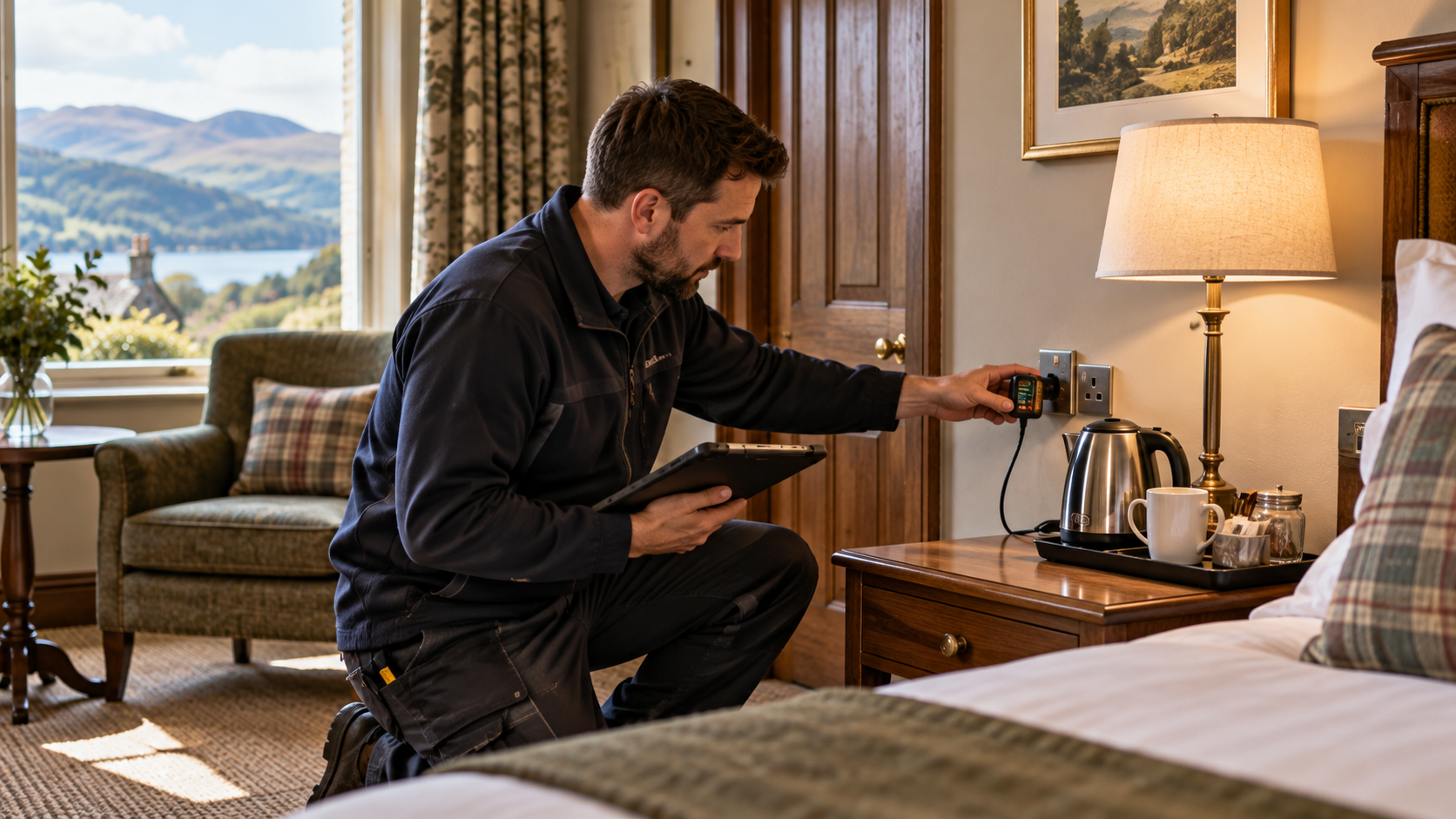
Electrical Safety in Hotels – Looking Beyond PAT Testing
Electrical Safety in Hotels – Looking Beyond PAT Testing
Electrical equipment is everywhere in a hotel.
Bedroom kettles, lamps and televisions are only the beginning. Add kitchen equipment, laundry machinery, computers, refrigeration, vacuum cleaners, maintenance tools and everything else used throughout the property and the numbers soon add up.
When electrical safety is discussed, PAT testing is often the first thing that comes to mind.
It has its place, but it is only part of the picture.
A test sticker tells you an item was checked on a particular date. It cannot tell you what happened to it the following week.
Damage happens during normal use
A vacuum cleaner cable can get caught underneath a door.
A kettle can be dropped.
A plug can work loose.
An extension lead that originally powered one item can slowly end up with several things connected to it.
These are everyday problems, and it will often be hotel staff who notice them first.
Housekeeping see electrical equipment in guest bedrooms every day. Kitchen staff know how their equipment normally behaves, while reception and office teams may notice damaged sockets, plugs or extension leads.
Nobody expects them to diagnose an electrical fault.
What they should know is when to stop using something and how to report it.
What happens once a fault has been reported?
This is where the hotel's maintenance system becomes important.
Imagine a housekeeper reports a damaged socket in a guest bedroom.
Has it been recorded? Does maintenance know? Can the room accidentally be put back into service before the repair has been completed?
Busy hospitality businesses rely heavily on verbal communication, but verbal messages are easy to lose during shift changes.
A simple method of recording defects and following them through can prevent smaller problems from being forgotten.
Don't forget the electrical installation
Portable equipment is only one part of electrical safety in hotels.
The fixed installation, sockets, switches, distribution boards and other electrical systems also need appropriate maintenance and inspection.
When a contractor provides a report, somebody needs to read it and understand whether any further work has been recommended.
Older hotels across Cumbria, the Lake District and parts of Scotland can be particularly interesting because buildings often develop faults over many years.
Bedrooms are refurbished, kitchens are replaced and more electrical equipment is added.
The important thing is to manage the building you have today, rather than assuming everything is satisfactory because it has never caused a problem before.
Electrical safety is often about noticing small changes early, reporting them and making sure somebody actually finishes the job.
Hospitality Secured
Operations Support | Building Compliance | Food Safety | Health & Safety
Practical support for safer, stronger hospitality.