COSHH in Hotels and Hospitality – Is the Information There When Staff Need It?
COSHH in Hotels and Hospitality – Is the Information There When Staff Need It?
Cleaning products are part of everyday life in hospitality.
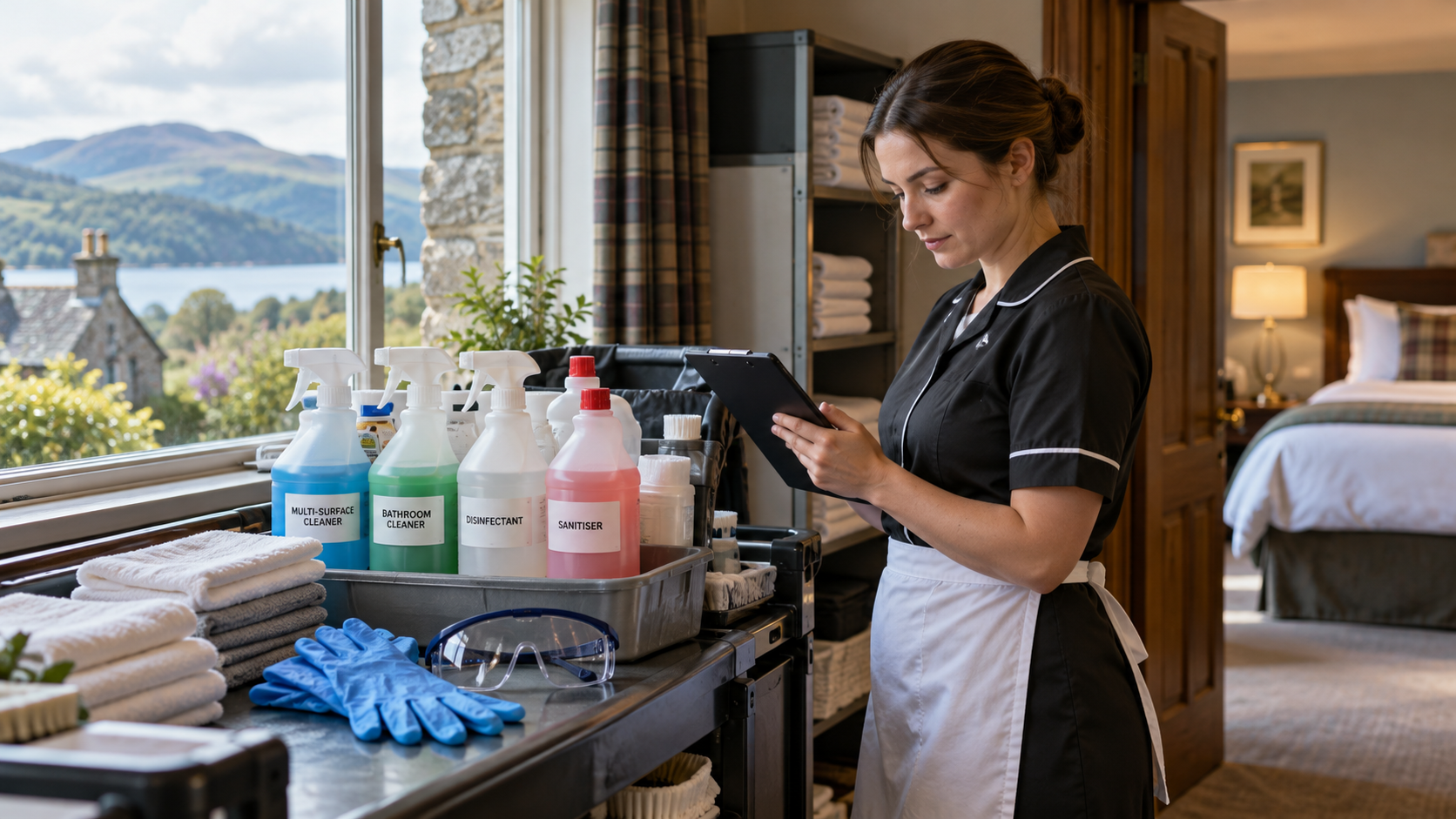
Housekeeping teams use them throughout bedrooms and bathrooms, kitchens have their own cleaning and sanitising products, while maintenance staff may be working with paints, lubricants, adhesives and other substances.
Because these products are used so often, it is easy for everyone to become familiar with them.
Sometimes a little too familiar.
Good COSHH management in hotels and hospitality businesses is not about having the biggest folder in the office. It is about knowing what substances are being used, understanding the risks and making sure staff can get the right information when they actually need it.
Can your staff find the Safety Data Sheet?
This is a simple place to start.
Pick a cleaning product and ask the person using it where they would find the Safety Data Sheet.
Would they know?
Safety Data Sheets provide useful information about hazards, first aid, storage and what to do following a spill or accidental exposure. Technical Data Sheets can also help staff understand how products should be diluted or used.
The information could be held electronically, on paper or through a combination of both.
What matters is accessibility.
If somebody gets a chemical in their eye during an evening shift, the Safety Data Sheet is not much help if it is locked in an office they cannot access.
Your COSHH assessment needs to reflect the actual job
A Safety Data Sheet and a COSHH assessment are not the same thing.
The manufacturer's information tells you about the product.
Your assessment should look at how that product is being used in your hotel, restaurant or hospitality business.
Is it diluted? Is it transferred into another container? Does the employee need gloves or eye protection? Where is it stored? Is there a possibility of it being mixed with another cleaning product?
This is where speaking to staff becomes useful.
What happens on paper and what happens during a busy shift are not always identical.
Across hotels and hospitality businesses in Cumbria, the Lake District and Scotland, COSHH should form part of normal day-to-day safety management.
Know what products are on site. Keep the information accessible. Review assessments when products or working methods change, and make sure the people actually using the chemicals understand what they are working with.
That is much more valuable than simply being able to produce a folder when somebody asks to see it.
Hospitality Secured
Operations Support | Building Compliance | Food Safety | Health & Safety
Practical support for safer, stronger hospitality.