Staff Inductions in Hospitality – More Than a Signature on a Form
Staff Inductions in Hospitality – More Than a Signature on a Form
Starting a new hospitality job can be a lot to take in.
There are names to remember, systems to learn, uniforms to sort out and usually somebody trying to explain the rota at the same time.
Somewhere amongst all of that is the health and safety induction.
Done properly, it gives a new member of staff the information they need to start working safely.
Done badly, it becomes another form signed on the first day and forgotten about.
Previous experience doesn't mean they know your building
A new employee may have worked in hospitality for twenty years.
They still do not know your fire escape routes.
They do not know where first aid equipment is kept, how accidents are reported or who they should speak to if they find something unsafe.
Every hotel is different.
That can be particularly noticeable across Cumbria, the Lake District and Scotland, where hospitality properties range from modern purpose-built hotels to historic buildings that have grown and changed over generations.
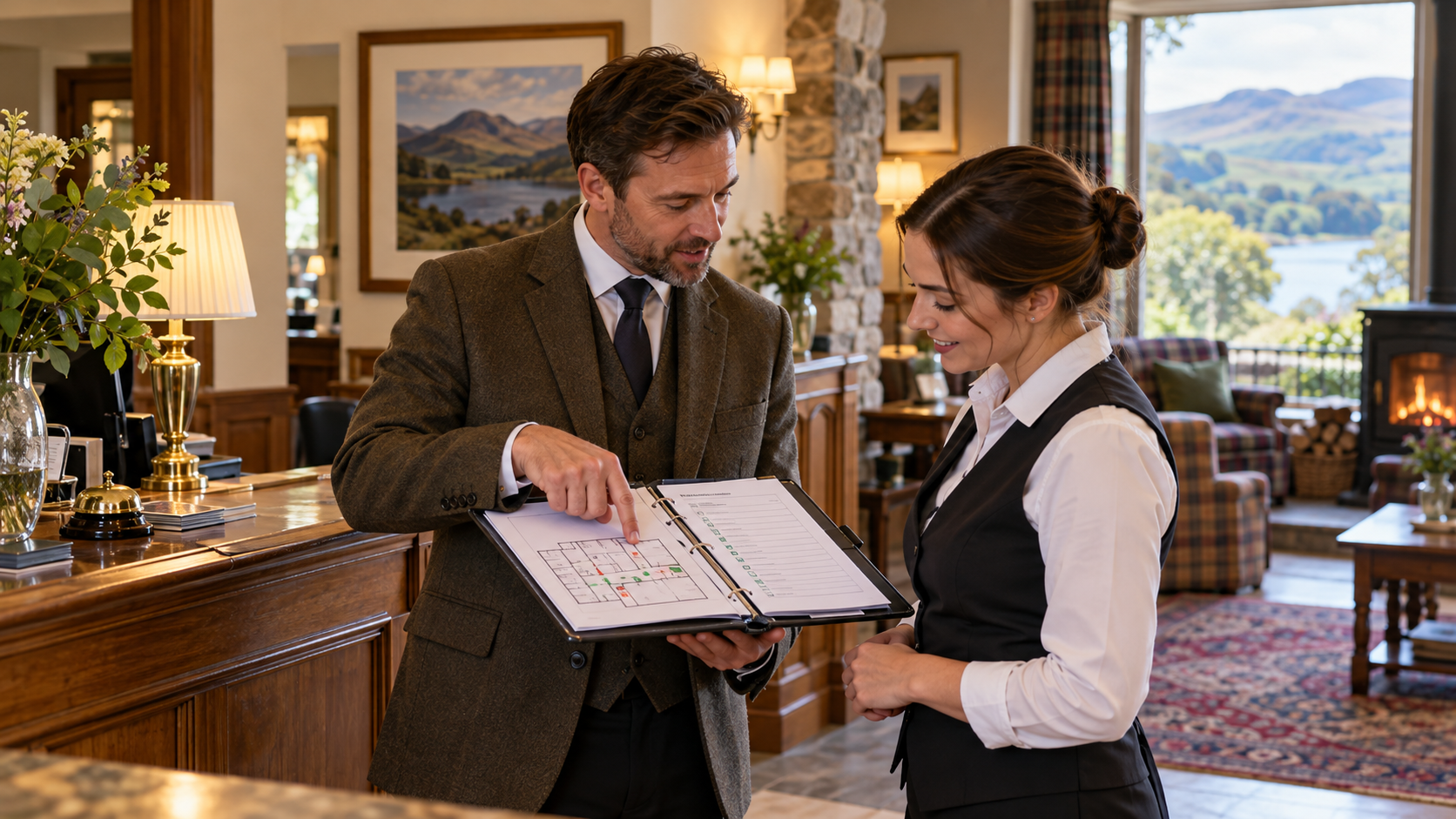
Showing somebody around a properly can be far more useful than sitting them in an office with a large induction document.
Start with what everybody needs to know
Some information is relevant to almost every employee.
What happens if the fire alarm sounds? How do they report an accident? Where can they get first aid? What should they do if they discover damaged equipment?
Training can then become more specific to the person's job.
Housekeeping staff may need COSHH, manual handling and equipment training.
Kitchen staff will have additional requirements around food safety, allergens, burns and machinery.
Maintenance staff will face different risks again.
Trying to deliver everything at once on somebody's first morning can be counterproductive.
Give them the important information, show them how things work and build on it as they settle into the role.
Check understanding
Rather than relying completely on a signature, ask a few questions.
Where do you go if the fire alarm sounds?
Where is the information for the cleaning chemical you are using?
Who would you tell if a guest had an accident?
Their answers will normally tell you far more than the completed form.
Training should also continue when roles change.
Someone begins working nights. A housekeeper starts helping with breakfast. A kitchen porter begins using a new piece of equipment.
Their job has changed, so it is worth asking whether their training needs to change as well.
For hospitality businesses across Cumbria, Scotland and the Lake District, staff induction does not need to become complicated.
You need the records, but the paperwork should support the training rather than becoming the reason for it.
A good induction leaves somebody knowing their workplace, understanding the basics and knowing who to ask when they are not sure.
That is what you actually want from it.
Hospitality Secured
Operations Support | Building Compliance | Food Safety | Health & Safety
Practical support for safer, stronger hospitality.